How to Plan for Glue-Down Carpet Removal
Bond strength, backing and the residue standard matter more than the carpet color or room count.
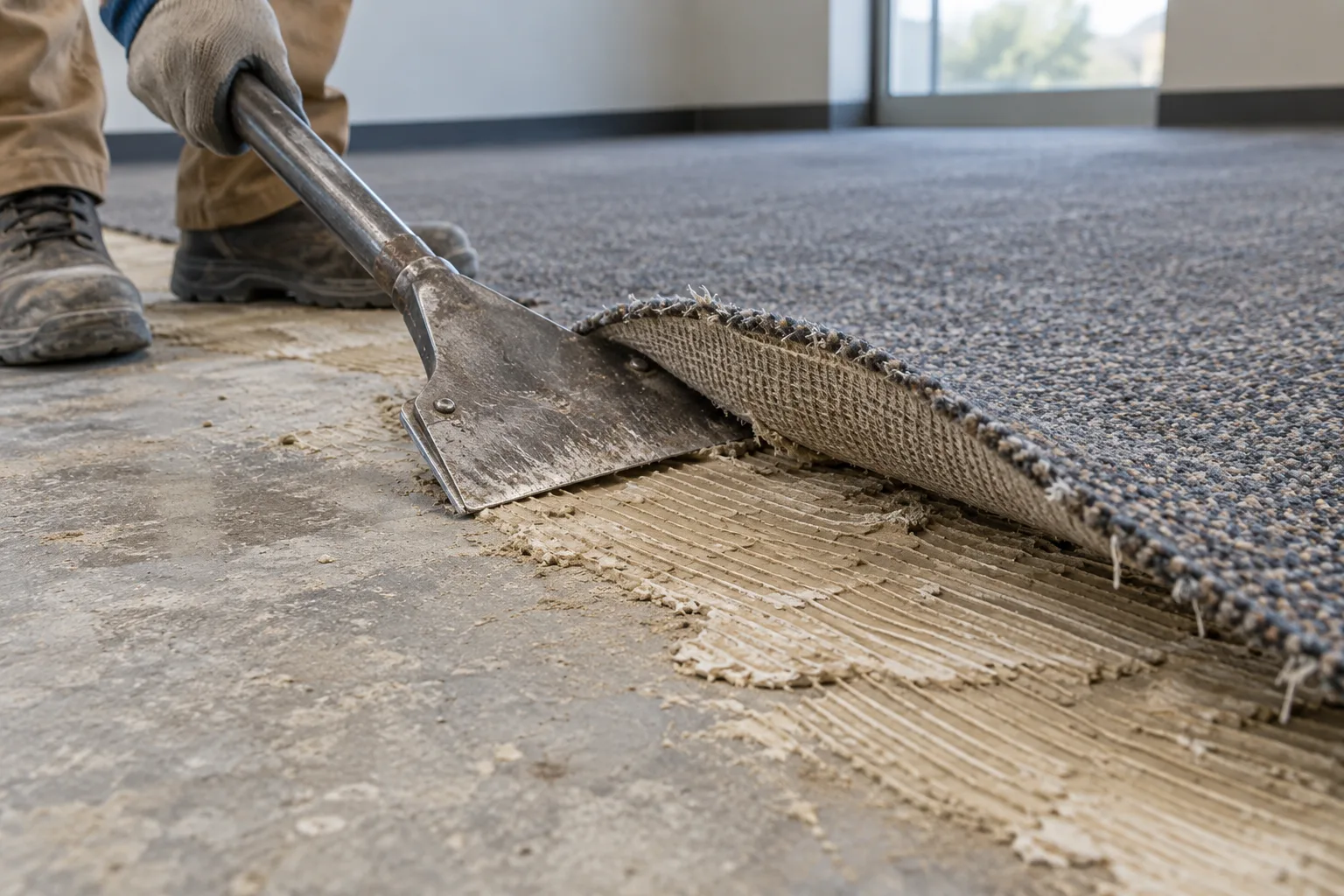
Lift an accessible edge only if it can be done safely and without damaging material that must remain. Direct-glue carpet has no loose padding layer; double-glue systems may bond both carpet and cushion. Photos of an edge help the estimator choose the right questions.
Define the removal boundary
Mark doorways, transitions, fixed casework and areas that stay. In an occupied space, agree on phases that preserve a safe route and avoid trapping furniture.
Set a realistic residue standard
Removing the carpet layer and removing every trace of adhesive are different tasks. New flooring may require scraping, grinding, patching or moisture testing by the appropriate contractor. Put the required handoff condition in writing.
Separate regulated-material questions
Older flooring assemblies can involve materials that need testing or specialized handling. A carpet-removal crew should not disturb suspect material or represent ordinary tear-out as abatement.
Field check
Direct-glue or cushion system
Substrate type
Area and cut boundaries
Furniture and occupancy
Required adhesive-residue standard
Testing or abatement questions
Need the service scope?
Scope direct-glue carpet separately because bond strength, backing and residue change the work.
Review Glue-Down Carpet Removal