What Might Be Under Old Carpet and Padding?
Padding, staples, tack strips, adhesive and an unknown substrate can all change the handoff after carpet comes up.
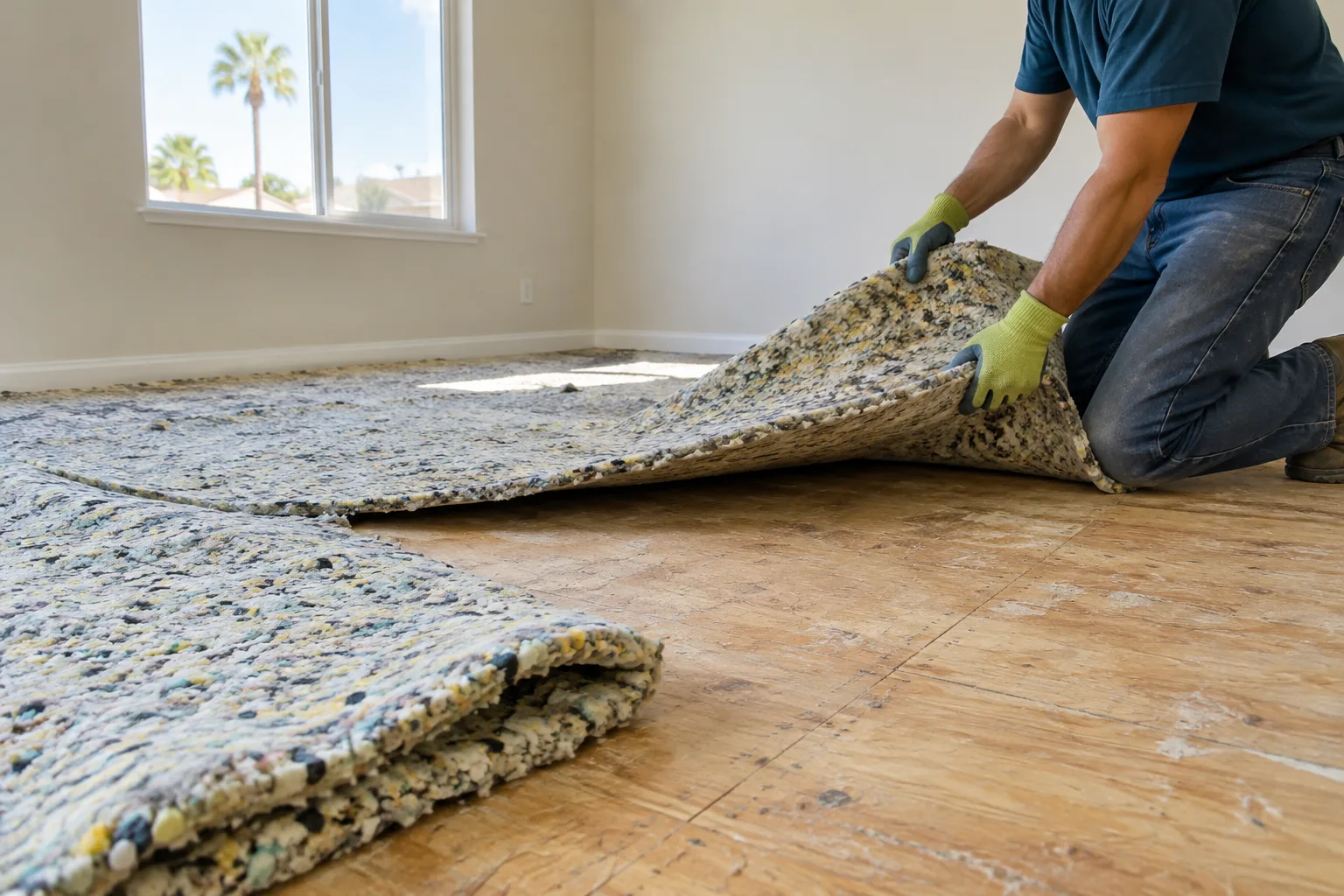
Common padding may be foam, rebond, rubber or felt. Its condition matters: intact sheets lift differently from material that has crumbled, stuck to the floor or absorbed moisture.
Fasteners follow the installation
Tack strips often run around room edges, while staples may secure padding across wood subfloors. Concrete installations may rely more on adhesive. The approved scope should say whether accessible strips and staples come out or stay for reuse.
The substrate needs its own inspection
Plywood, oriented strand board, concrete or finished wood may appear under the padding. Removal reveals stains, cracks, squeaks or damage but does not diagnose or repair them. Let the next flooring contractor inspect the exposed surface.
Moisture changes the job
The U.S. EPA advises drying water-damaged areas and items within 24 to 48 hours to help prevent mold growth. If there is visible growth, a persistent odor or an active leak, stop and get the correct assessment instead of treating hauling as remediation.
Field check
Padding type if known
Wood or concrete subfloor
Staples, tack strips or glue
Visible moisture or odor
What the installer wants retained
Separate repair or remediation needs
Sources
Need the service scope?
Clear the layer beneath the carpet, including agreed padding, accessible staples and perimeter tack strips.
Review Carpet Padding & Tack-Strip Removal